The Most Influential Images of All Time
Earthrise.
(William Anders, NASA, 1968)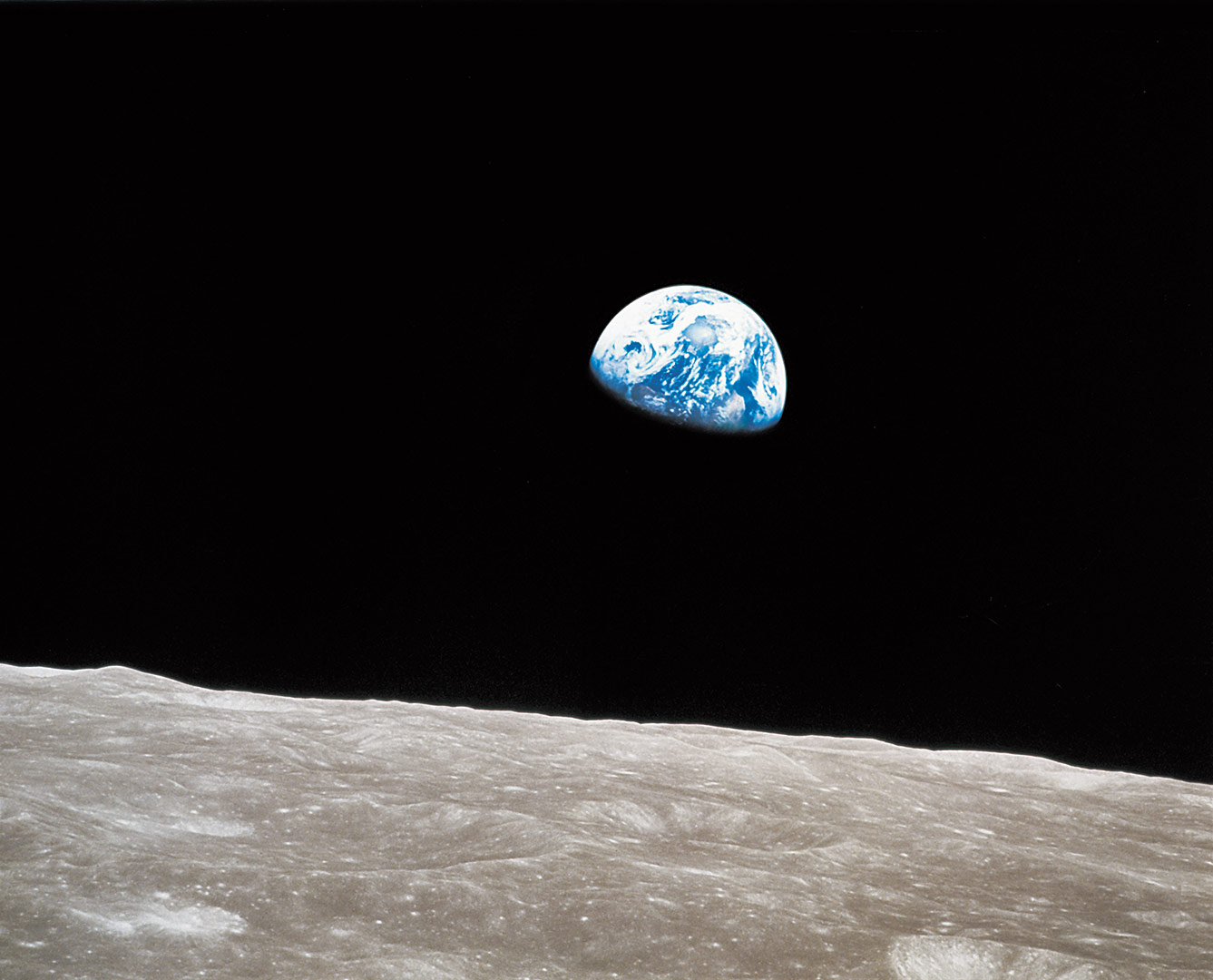
It’s never easy to identify the moment a hinge turns in history. When it comes to humanity’s first true grasp of the beauty, fragility and loneliness of our world, however, we know the precise instant. It was on December 24, 1968, exactly 75 hours, 48 minutes and 41 seconds after the Apollo 8 spacecraft lifted off from Cape Canaveral en route to becoming the first manned mission to orbit the moon. Astronauts Frank Borman, Jim Lovell and Bill Anders entered lunar orbit on Christmas Eve of what had been a bloody, war-torn year for America. At the beginning of the fourth of 10 orbits, their spacecraft was emerging from the far side of the moon when a view of the blue-white planet filled one of the hatch windows. “Oh, my God! Look at that picture over there! Here’s the Earth coming up. Wow, is that pretty!” Anders exclaimed. He snapped a picture—in black and white. Lovell scrambled to find a color canister. “Well, I think we missed it,” Anders said. Lovell looked through windows three and four. “Hey, I got it right here!” he exclaimed. A weightless Anders shot to where Lovell was floating and fired his Hasselblad. “You got it?” Lovell asked. “Yep,” Anders answered. The image—our first full-color view of our planet from off of it—helped to launch the environmental movement. And, just as important, it helped human beings recognize that in a cold and punishing cosmos, we’ve got it pretty good.
Muhammad Ali vs. Sonny Liston
(Neil Leifer, 1965)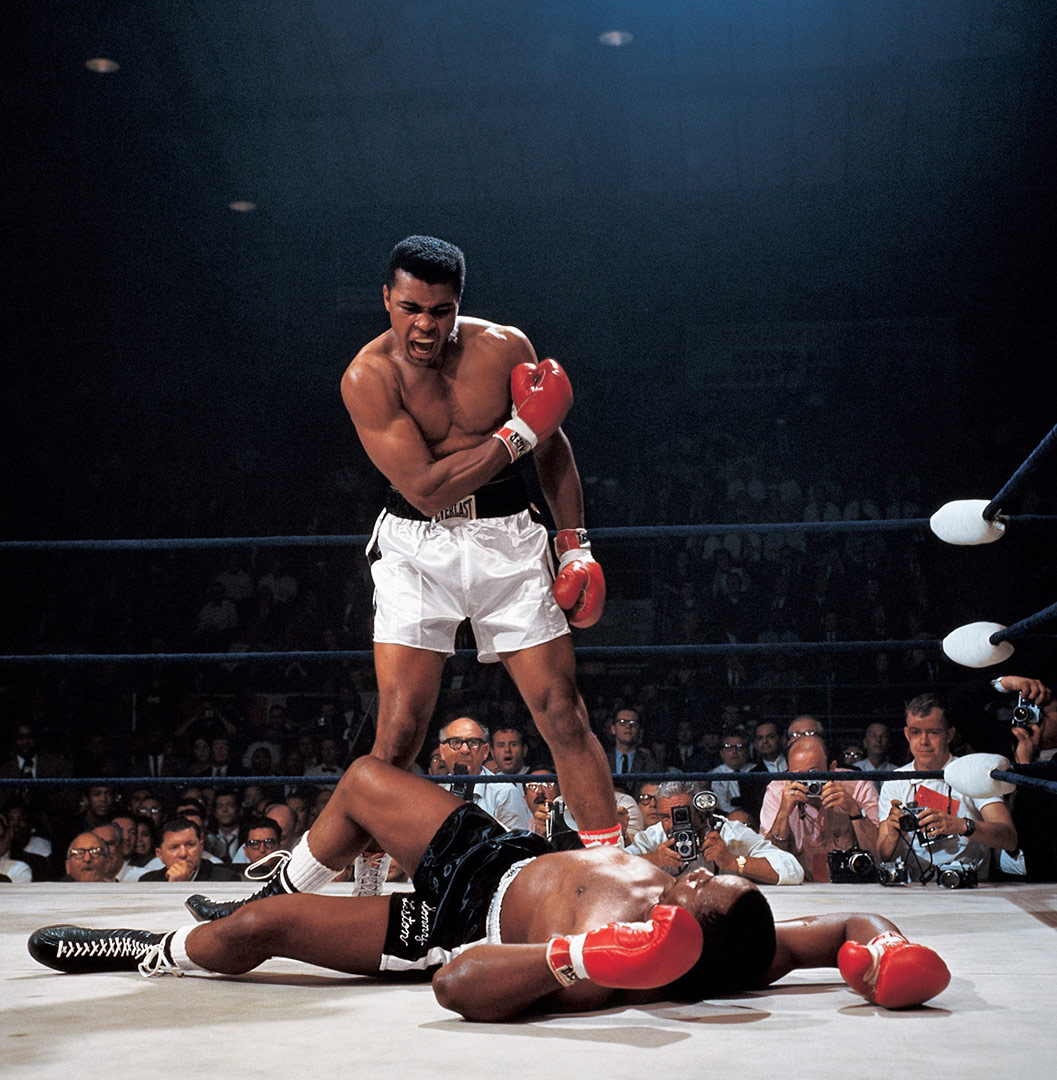
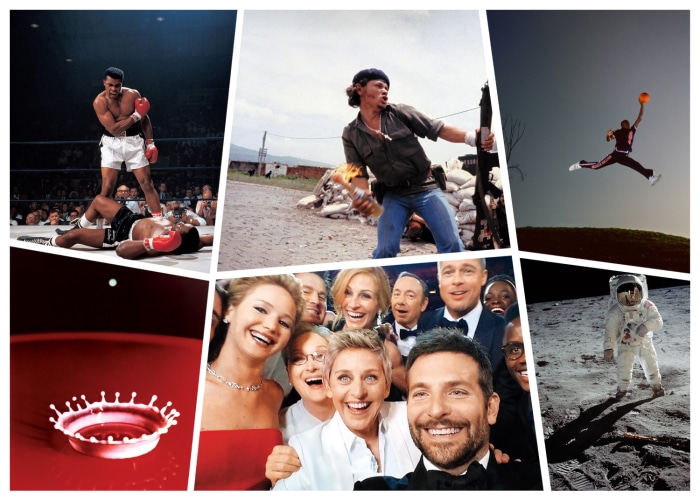
So much of great photography is being in the right spot at the right moment. That was what it was like for sports illustrated photographer Neil Leifer when he shot perhaps the greatest sports photo of the century. “I was obviously in the right seat, but what matters is I didn’t miss,” he later said. Leifer had taken that ringside spot in Lewiston, Maine, on May 25, 1965, as 23-year-old heavyweight boxing champion Muhammad Ali squared off against 34-year-old Sonny Liston, the man he’d snatched the title from the previous year. One minute and 44 seconds into the first round, Ali’s right fist connected with Liston’s chin and Liston went down. Leifer snapped the photo of the champ towering over his vanquished opponent and taunting him, “Get up and fight, sucker!” Powerful overhead lights and thick clouds of cigar smoke had turned the ring into the perfect studio, and Leifer took full advantage. His perfectly composed image captures Ali radiating the strength and poetic brashness that made him the nation’s most beloved and reviled athlete, at a moment when sports, politics and popular culture were being squarely battered in the tumult of the ’60s.
Pillars of Creation
(NASA, 1995)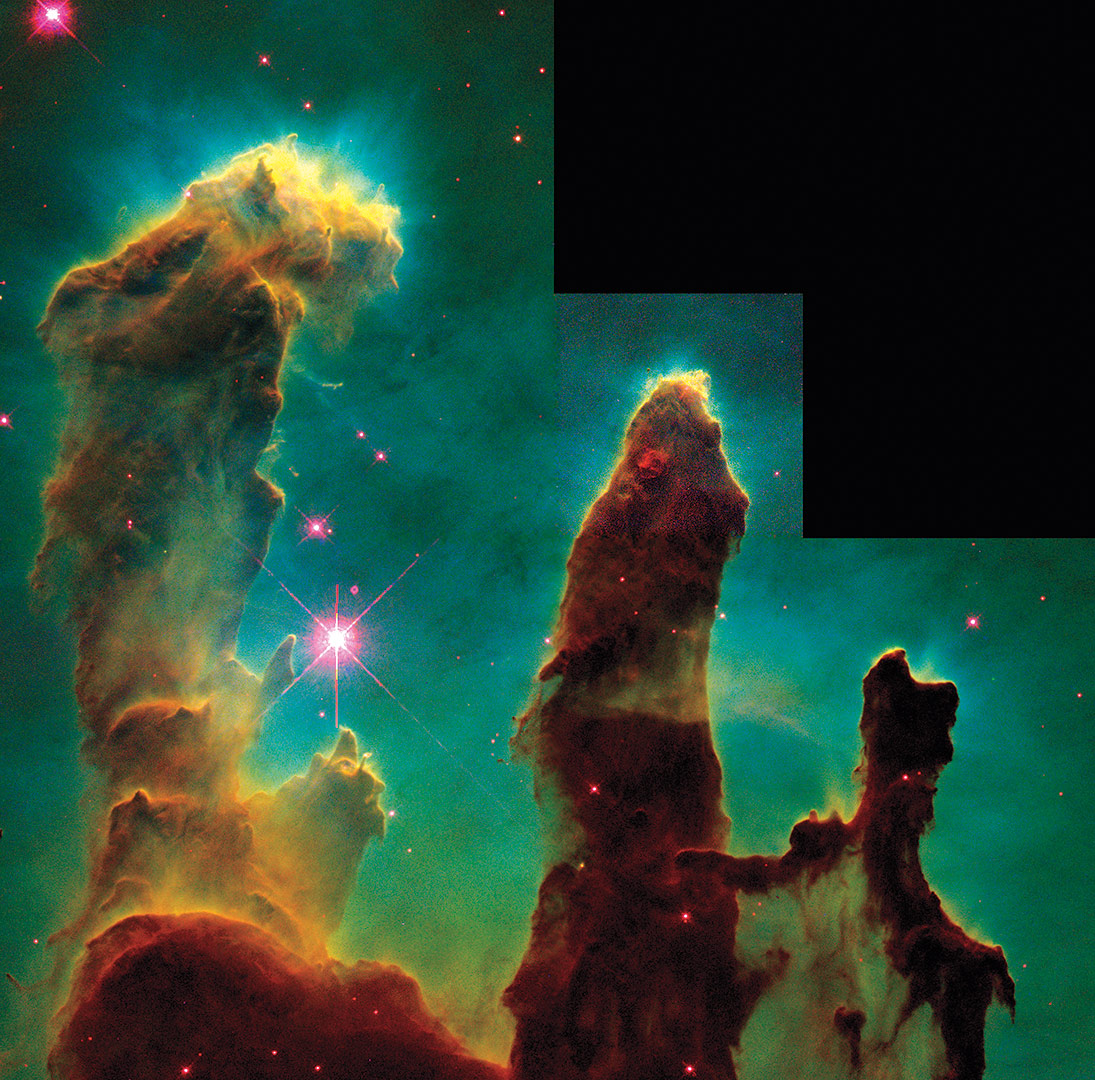
The Hubble Space Telescope almost didn’t make it. Carried aloft in 1990 aboard the space shuttle Discovery, it was over-budget, years behind schedule and, when it finally reached orbit, nearsighted, its 8-foot mirror distorted as a result of a manufacturing flaw. It would not be until 1993 that a repair mission would bring Hubble online. Finally, on April 1, 1995, the telescope delivered the goods, capturing an image of the universe so clear and deep that it has come to be known as Pillars of Creation. What Hubble photographed is the Eagle Nebula, a star-forming patch of space 6,500 light-years from Earth in the constellation Serpens Cauda. The great smokestacks are vast clouds of interstellar dust, shaped by the high-energy winds blowing out from nearby stars (the black portion in the top right is from the magnification of one of Hubble’s four cameras). But the science of the pillars has been the lesser part of their significance. Both the oddness and the enormousness of the formation—the pillars are 5 light-years, or 30 trillion miles, long—awed, thrilled and humbled in equal measure. One image achieved what a thousand astronomy symposia never could.
Windblown Jackie
(Ron Galella, 1971)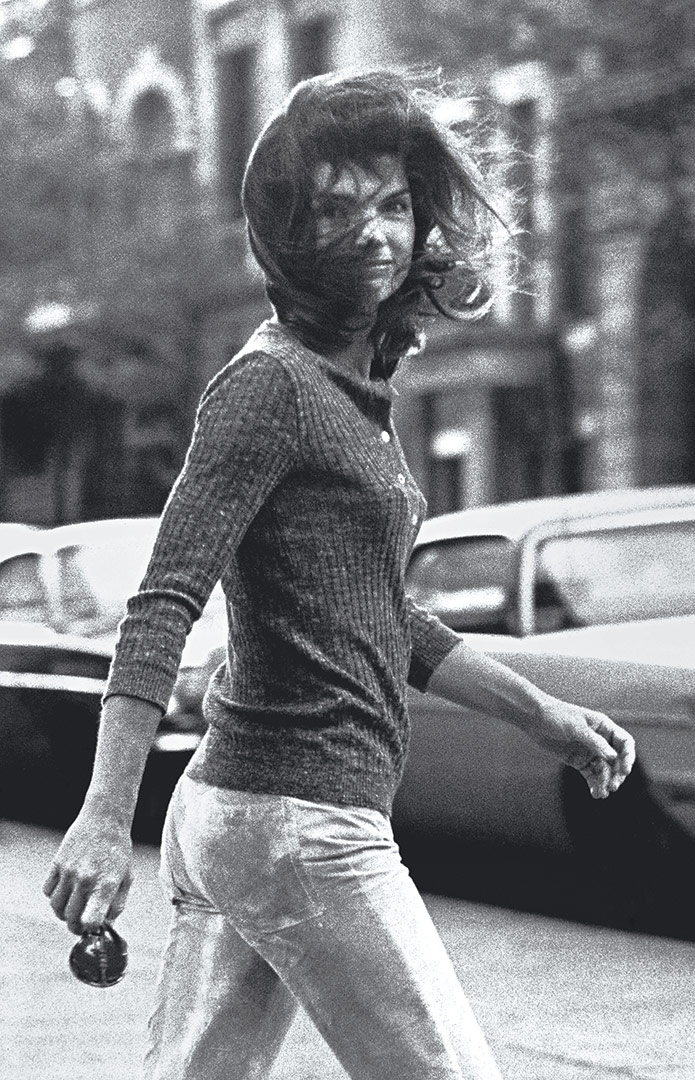
People simply could not get enough of Jacqueline Kennedy Onassis, the beautiful young widow of the slain President who married a fabulously wealthy Greek shipping tycoon. She was a public figure with a tightly guarded private life, which made her a prime target for the photographers who followed wherever she went. And none was as devoted to capturing the former First Lady as Ron Galella. One of the original freewheeling celebrity shooters, Galella created the model for today’s paparazzi with a follow-and-ambush style that ensnared everyone from Michael Jackson and Sophia Loren to Marlon Brando, who so resented Galella’s attention that he knocked out five of the photographer’s teeth. But Galella’s favorite subject was Jackie O., whom he shot to the point of obsession. It was Galella’s relentless fixation that led him to hop in a taxi and trail Onassis after he spotted her on New York City’s Upper East Side in October 1971. The driver honked his horn, and Galella clicked his shutter just as Onassis turned to look in his direction. “I don’t think she knew it was me,” he recalled. “That’s why she smiled a little.” The picture, which Galella proudly called “my Mona Lisa,” exudes the unguarded spontaneity that marks a great celebrity photo. “It was the iconic photograph of the American celebrity aristocracy, and it created a genre,” says the writer Michael Gross. The image also tested the blurry line between newsgathering and a public figure’s personal rights. Jackie, who resented the constant attention, twice dragged Galella to court and eventually got him banned from photographing her family. No shortage of others followed in his wake.
Guerillero heroico
(Alberto Korda, 1960)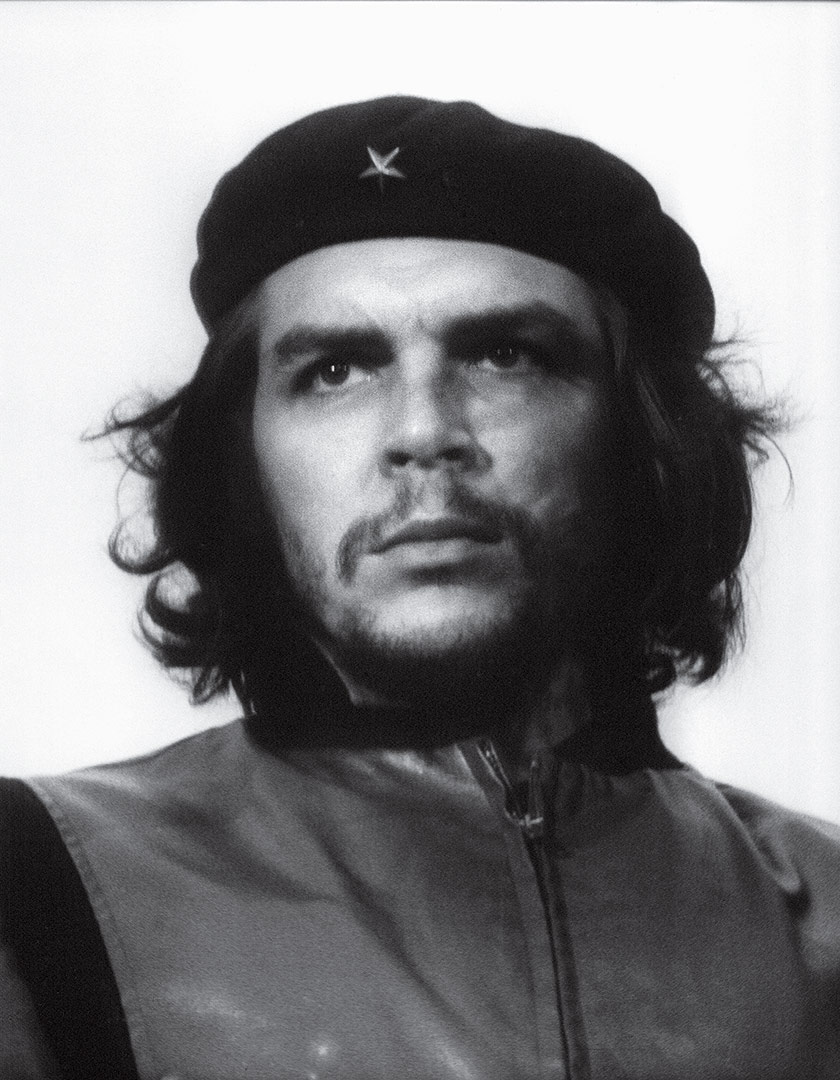
The day before Alberto Korda took his iconic photograph of Cuban revolutionary Che Guevara, a ship had exploded in Havana Harbor, killing the crew and dozens of dockworkers. Covering the funeral for the newspaper Revolución, Korda focused on Fidel Castro, who in a fiery oration accused the U.S. of causing the explosion. The two frames he shot of Castro’s young ally were a seeming afterthought, and they went unpublished by the newspaper. But after Guevara was killed leading a guerrilla movement in Bolivia nearly seven years later, the Cuban regime embraced him as a martyr for the movement, and Korda’s image of the beret-clad revolutionary soon became its most enduring symbol. In short order, Guerrillero Heroico was appropriated by artists, causes and admen around the world, appearing on everything from protest art to underwear to soft drinks. It has become the cultural shorthand for rebellion and one of the most recognizable and reproduced images of all time, with its influence long since transcending its steely-eyed subject.
Milk Drop Coronet
(Harold Edgerton, 1957)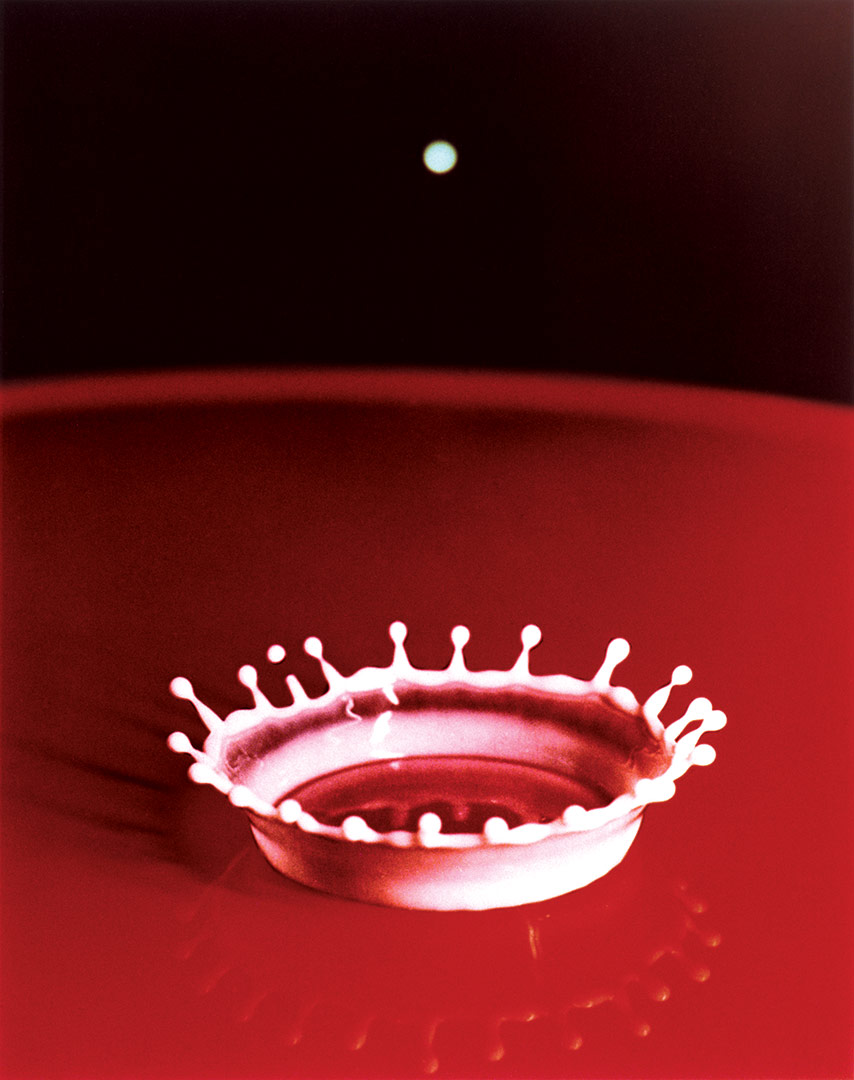
Before Harold Edgerton rigged a milk dropper next to a timer and a camera of his own invention, it was virtually impossible to take a good photo in the dark without bulky equipment. It was similarly futile to try to photograph a fleeting moment. But in the 1950s at his lab at MIT, Edgerton started tinkering with a process that would change the future of photography. There the electrical-engineering professor combined high-tech strobe lights with camera shutter motors to capture moments imperceptible to the naked eye. Milk Drop Coronet, his revolutionary stop-motion photograph, freezes the impact of a drop of milk on a table, a crown of liquid discernible to the camera for only a millisecond. The picture proved that photography could advance human understanding of the physical world, and the technology Edgerton used to take it laid the foundation for the modern electronic flash.
Edgerton worked for years to perfect his milk-drop photographs, many of which were black and white; one version was featured in the first photography exhibition at New York City’s Museum of Modern Art, in 1937. And while the man known as Doc captured other blink-and-you-missed-it moments, like balloons bursting and a bullet piercing an apple, his milk drop remains a quintessential example of photography’s ability to make art out of evidence.
Oscars Selfie
(Bradley Cooper, 2014)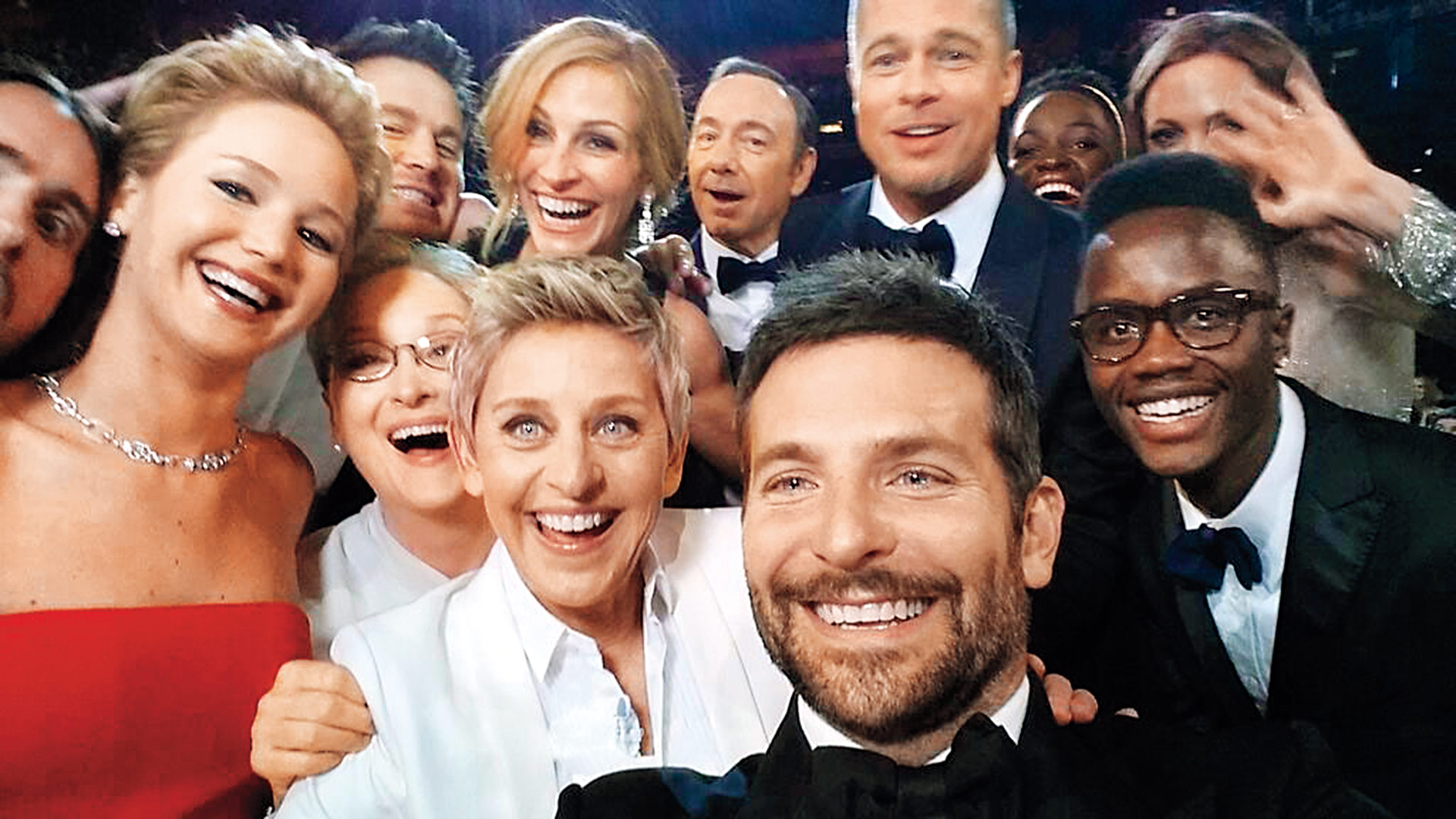
It was a moment made for the celebrity-saturated Internet age. In the middle of the 2014 Oscars, host Ellen DeGeneres waded into the crowd and corralled some of the world’s biggest stars to squeeze in for a selfie. As Bradley Cooper held the phone, Meryl Streep, Brad Pitt, Jennifer Lawrence and Kevin Spacey, among others, pressed their faces together and mugged. But it was what DeGeneres did next that turned a bit of Hollywood levity into a transformational image. After Cooper took the picture, DeGeneres immediately posted it on Twitter, where it was retweeted over 3 million times, more than any other photo in history.
It was also an enviable advertising coup for Samsung. DeGeneres used the company’s phone for the stunt, and the brand was prominently displayed in the program’s televised “selfie moment.” Samsung has been coy about the extent of the planning, but its public relations firm acknowledged its value could be as high as $1 billion. That would never have been the case were it not for the incredible speed and ease with which images can now spread around the world.
A Man on the Moon
(Neil Armstrong, NASA, 1969)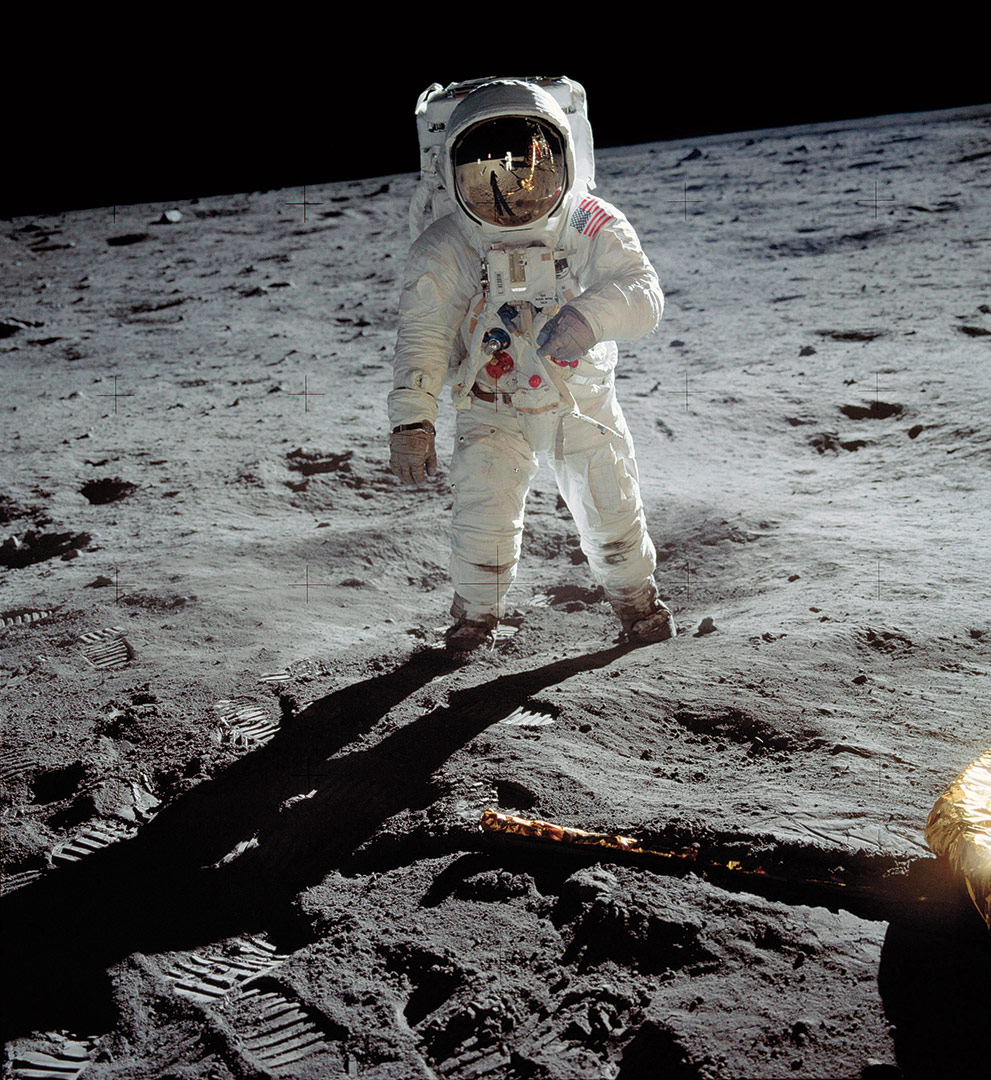
Somewhere in the Sea of Tranquillity, the little depression in which Buzz Aldrin stood on the evening of July 20, 1969, is still there—one of billions of pits and craters and pockmarks on the moon’s ancient surface. But it may not be the astronaut’s most indelible mark.
Aldrin never cared for being the second man on the moon—to come so far and miss the epochal first-man designation Neil Armstrong earned by a mere matter of inches and minutes. But Aldrin earned a different kind of immortality. Since it was Armstrong who was carrying the crew’s 70-millimeter Hasselblad, he took all of the pictures—meaning the only moon man earthlings would see clearly would be the one who took the second steps. That this image endured the way it has was not likely. It has none of the action of the shots of Aldrin climbing down the ladder of the lunar module, none of the patriotic resonance of his saluting the American flag. He’s just standing in place, a small, fragile man on a distant world—a world that would be happy to kill him if he removed so much as a single article of his exceedingly complex clothing. His arm is bent awkwardly—perhaps, he has speculated, because he was glancing at the checklist on his wrist. And Armstrong, looking even smaller and more spectral, is reflected in his visor. It’s a picture that in some ways did everything wrong if it was striving for heroism. As a result, it did everything right.
Abraham Lincoln
(Mathew Brady, 1860)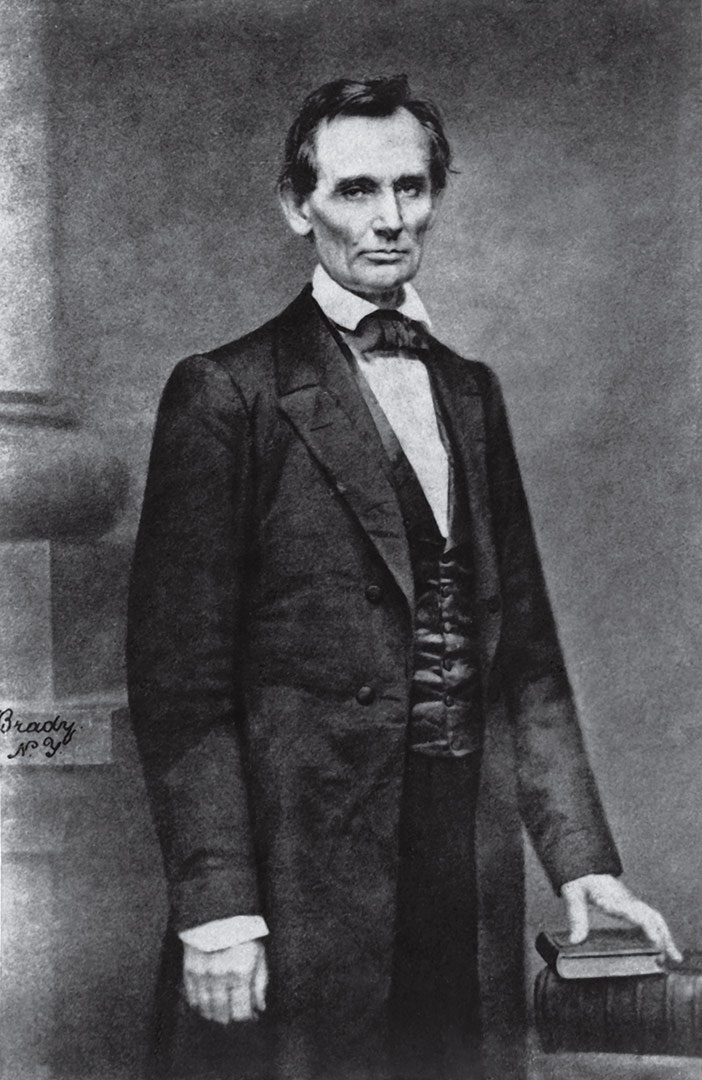
Abraham Lincoln was a little-known one-term Illinois Congressman with national aspirations when he arrived in New York City in February 1860 to speak at the Cooper Union. The speech had to be perfect, but Lincoln also knew the importance of image. Before taking to the podium, he stopped at the Broadway photography studio of Mathew B. Brady. The portraitist, who had photographed everyone from Edgar Allan Poe to James Fenimore Cooper and would chronicle the coming Civil War, knew a thing or two about presentation. He set the gangly rail splitter in a statesmanlike pose, tightened his shirt collar to hide his long neck and retouched the image to improve his looks. In a click of a shutter, Brady dispelled talk of what Lincoln said were “rumors of my long ungainly figure … making me into a man of human aspect and dignified bearing.” By capturing Lincoln’s youthful features before the ravages of the Civil War would etch his face with the strains of the Oval Office, Brady presented him as a calm contender in the fractious antebellum era. Lincoln’s subsequent talk before a largely Republican audience of 1,500 was a resounding success, and Brady’s picture soon appeared in publications like Harper’s Weekly and on cartes de visite and election posters and buttons, making it the most powerful early instance of a photo used as campaign propaganda. As the portrait spread, it propelled Lincoln from the edge of greatness to the White House, where he preserved the Union and ended slavery. As Lincoln later admitted, “Brady and the Cooper Union speech made me President of the United States.”
Michael Jordan
(Co Rentmeester, 1984)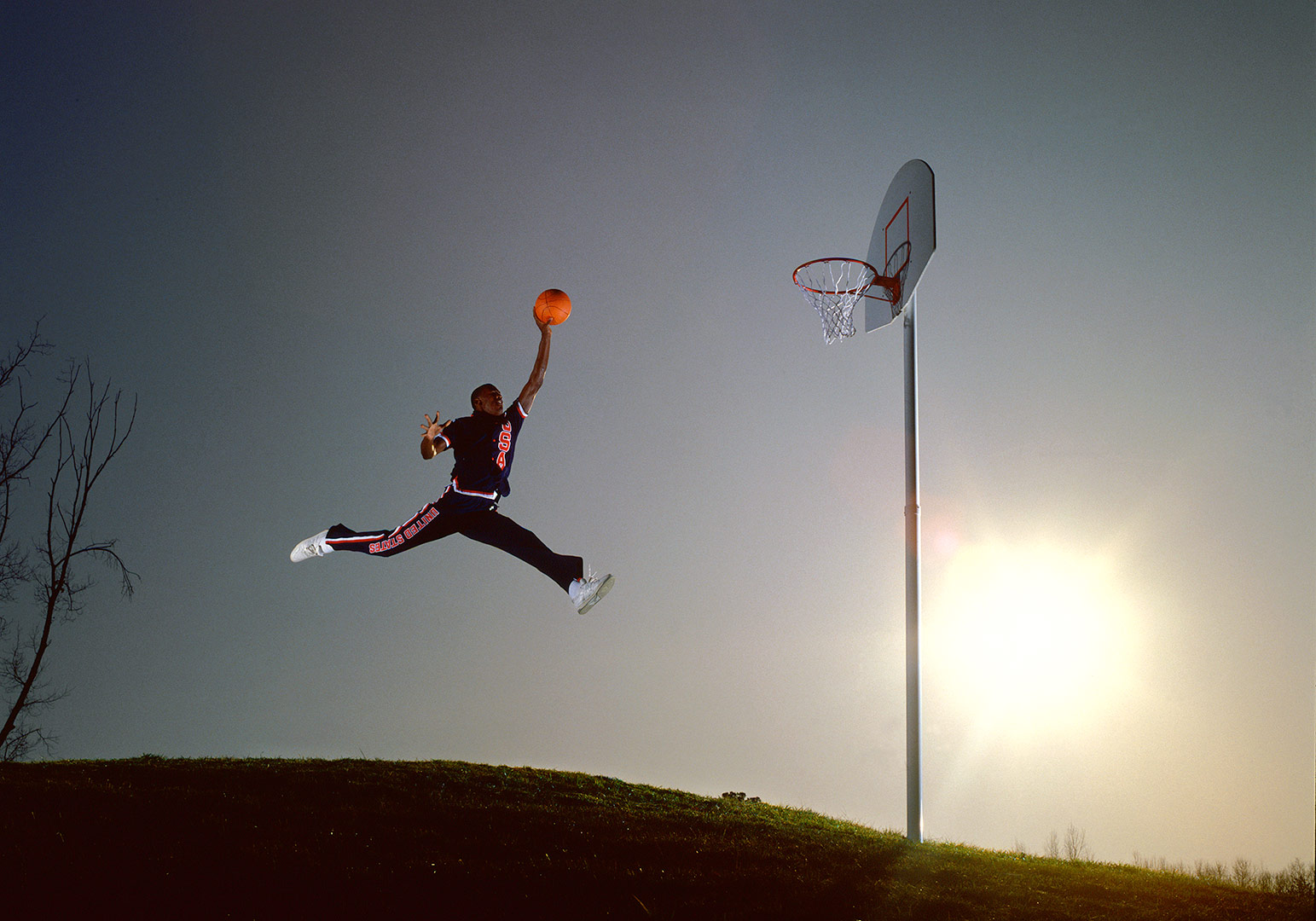
It may be the most famous silhouette ever photographed. Shooting Michael Jordan for LIFE in 1984, Jacobus “Co” Rentmeester captured the basketball star soaring through the air for a dunk, legs split like a ballet dancer’s and left arm stretched to the stars. A beautiful image, but one unlikely to have endured had Nike not devised a logo for its young star that bore a striking resemblance to the photo. Seeking design inspiration for its first Air Jordan sneakers, Nike paid Rentmeester $150 for temporary use of his slides from the life shoot. Soon, “Jumpman” was etched onto shoes, clothing and bedroom walls around the world, eventually becoming one of the most popular commercial icons of all time. With Jumpman, Nike created the concept of athletes as valuable commercial properties unto themselves. The Air Jordan brand, which today features other superstar pitchmen, earned $3.2 billion in 2014. Rentmeester, meanwhile, has sued Nike for copyright infringement. No matter the outcome, it’s clear his image captures the ascendance of sports celebrity into a multibillion-dollar business, and it’s still taking off.
D-Day
(Robert Capa, 1944)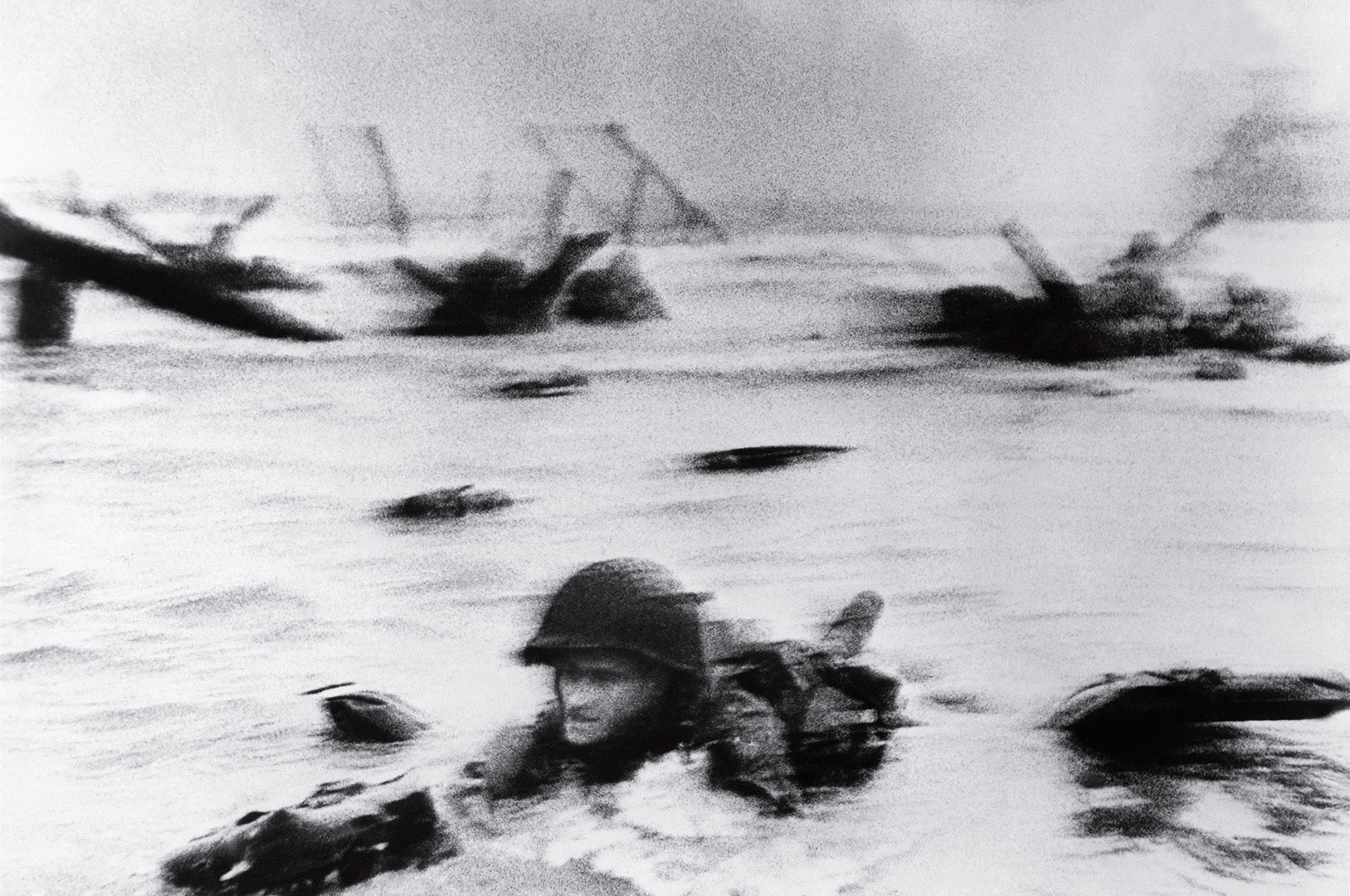
It was the invasion to save civilization, and LIFE’s Robert Capa was there, the only still photographer to wade with the 34,250 troops onto Omaha Beach during the D-Day landing. His photographs—infused with jarring movement from the center of that brutal assault—gave the public an American soldier’s view of the dangers of war. The soldier in this case was Private First Class Huston Riley, who after the Nazis shelled his landing craft jumped into water so deep that he had to walk along the bottom until he could hold his breath no more. When he activated his Navy M-26 belt life preservers and floated to the surface, Riley became a target for the guns and artillery shells mowing down his comrades. Struck several times, the 22-year-old soldier took about half an hour to reach the Normandy shore. Capa took this photo of him in the surf and then with the assistance of a sergeant helped Riley, who later recalled thinking, “What the hell is this guy doing here? I can’t believe it. Here’s a cameraman on the shore.” Capa spent an hour and a half under fire as men around him died. A courier then transported his four rolls of film to LIFE’s London offices, and the magazine’s general manager stopped the presses to get them into the June 19 issue. Most of the film, though, showed no images after processing, and only some frames survived. The remaining images have a grainy, blurry look that gives them the frenetic feel of action, a quality that has come to define our collective memory of that epic clash.
Flag Raising on Iwo Jima
(Joe Rosenthal, 1945)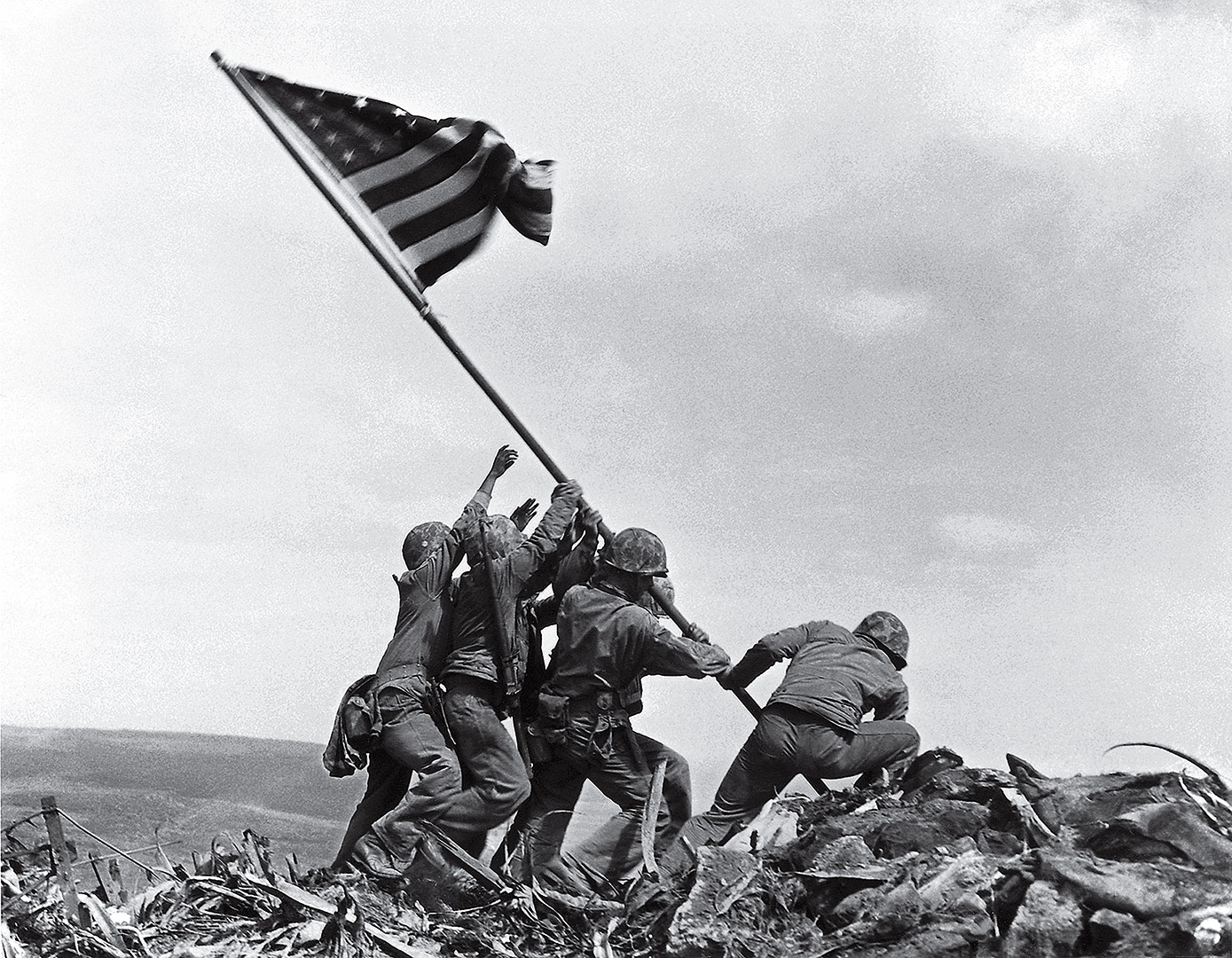
It is but a speck of an island 760 miles south of Tokyo, a volcanic pile that blocked the Allies’ march toward Japan. The Americans needed Iwo Jima as an air base, but the Japanese had dug in. U.S. troops landed on February 19, 1945, beginning a month of fighting that claimed the lives of 6,800 Americans and 21,000 Japanese. On the fifth day of battle, the Marines captured Mount Suribachi. An American flag was quickly raised, but a commander called for a bigger one, in part to inspire his men and demoralize his opponents. Associated Press photographer Joe Rosenthal lugged his bulky Speed Graphic camera to the top, and as five Marines and a Navy corpsman prepared to hoist the Stars and Stripes, Rosenthal stepped back to get a better frame—and almost missed the shot. “The sky was overcast,” he later wrote of what has become one of the most recognizable images of war. “The wind just whipped the flag out over the heads of the group, and at their feet the disrupted terrain and the broken stalks of the shrubbery exemplified the turbulence of war.” Two days later Rosenthal’s photo was splashed on front pages across the U.S., where it was quickly embraced as a symbol of unity in the long-fought war. The picture, which earned Rosenthal a Pulitzer Prize, so resonated that it was made into a postage stamp and cast as a 100-ton bronze memorial.
Molotov Man
(Susan Meiselas, 1979)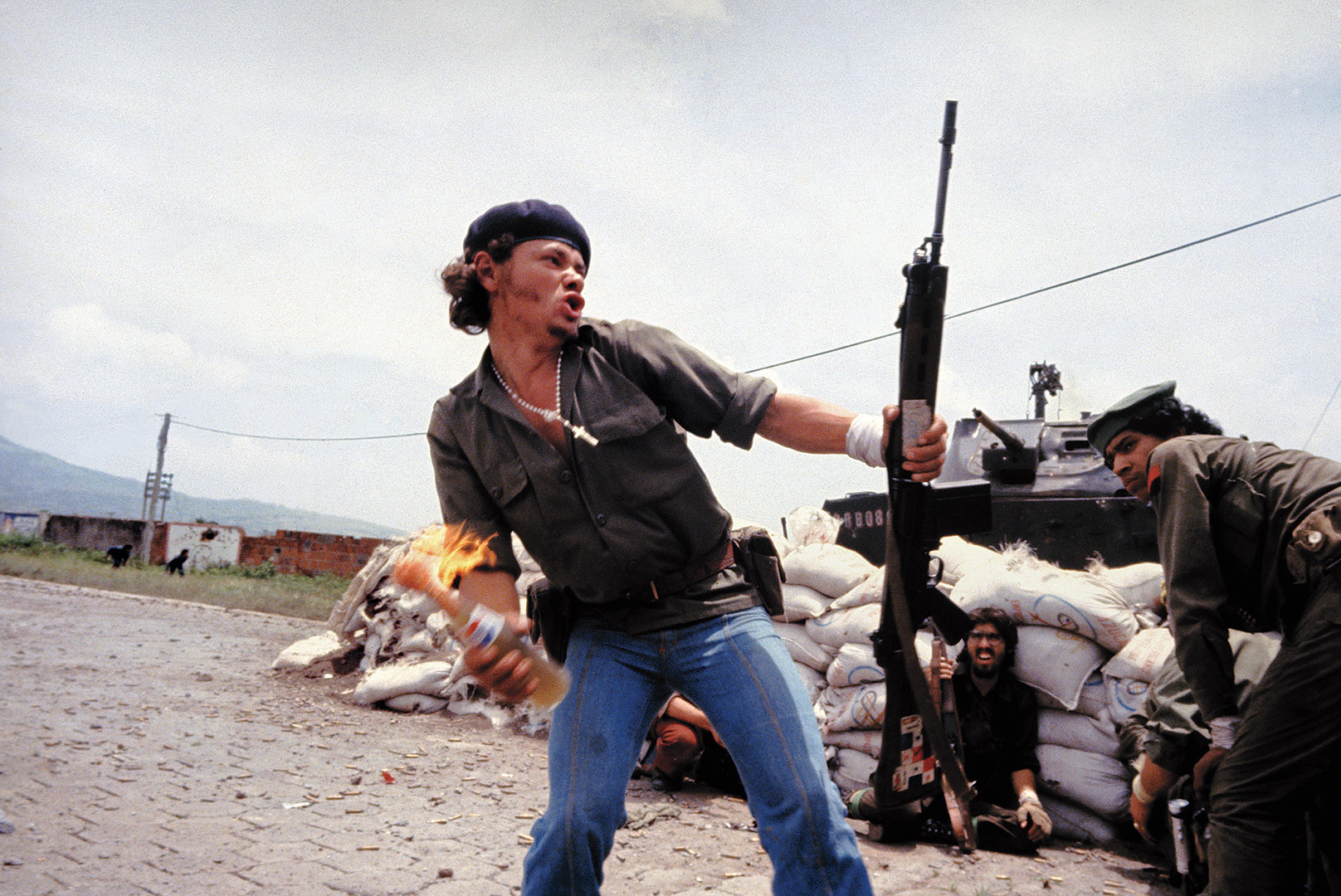
Susan Meiselas traveled to Nicaragua in the late 1970s as a young photographer with an anthropologist’s eye, keen to make sense of the struggle between the long-standing Somoza dictatorship and the socialist Sandinistas fighting to overthrow it. For six weeks she roamed the country, documenting a nation of grinding poverty, stunning natural beauty and wrenching inequality. Meiselas’ work was sympathetic to the Sandinista cause, and she gained the trust of the revolutionaries as they slowly prevailed in the fight. On the day before President Anastasio Somoza Debayle fled, Meiselas photographed Pablo de Jesus “Bareta” Araúz lobbing a Molotov cocktail at one of the last national guard fortresses. After the Sandinistas took power, the image became the defining symbol of the revolution—a reviled dictator toppled by a ragtag army of denim-clad fighters wielding makeshift weapons. Eagerly disseminated by the Sandinistas, Molotov Man soon became ubiquitous throughout Nicaragua, appearing on matchbooks, T-shirts, billboards and brochures. It later became a flash point in the debate over artistic appropriation when the painter Joy Garnett used it as the basis of her 2003 painting Molotov.
Raising a Flag over the Reichstag
(Yevgeny Khaldei, 1945)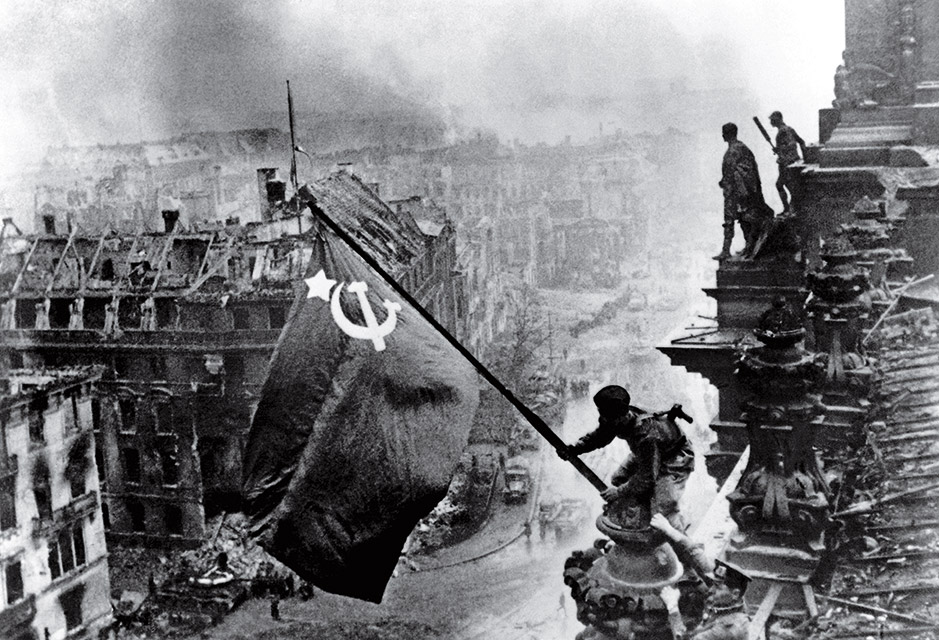
“This is what I was waiting for for 1,400 days,” the Ukrainian-born Yevgeny Khaldei said as he gazed at the ruins of Berlin on May 2, 1945. After four years of fighting and photographing across Eastern Europe, the Red Army soldier arrived in the heart of the Nazis’ homeland armed with his Leica III rangefinder and a massive Soviet flag that his uncle, a tailor, had fashioned for him from three red tablecloths. Adolf Hitler had committed suicide two days before, yet the war still raged as Khaldei made his way to the Reichstag. There he told three soldiers to join him, and they clambered up broken stairs onto the parliament building’s blood-soaked parapet. Gazing through his camera, Khaldei knew he had the shot he had hoped for: “I was euphoric.” In printing, Khaldei dramatized the image by intensifying the smoke and darkening the sky—even scratching out part of the negative—to craft a romanticized scene that was part reality, part artifice and all patriotism. Published in the Russian magazine Ogonek, the image became an instant propaganda icon. And no wonder. The flag jutting from the heart of the enemy exalted the nobility of communism, proclaimed the Soviets the new overlords and hinted that by lowering the curtain of war, Premier Joseph Stalin would soon hoist a cold new iron one across the land.
Winston Churchill
(Yousuf Karsh, 1941)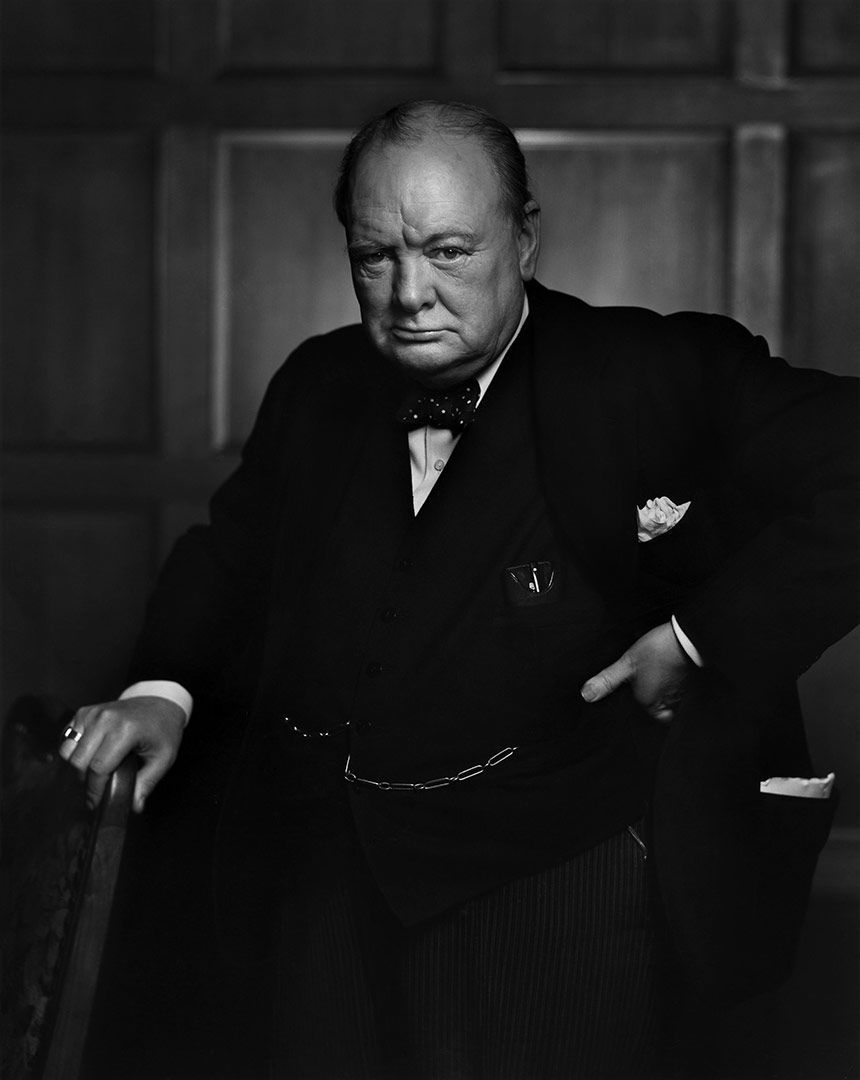
Britain stood alone in 1941. By then Poland, France and large parts of Europe had fallen to the Nazi forces, and it was only the tiny nation’s pilots, soldiers and sailors, along with those of the Commonwealth, who kept the darkness at bay. Winston Churchill was determined that the light of England would continue to shine. In December 1941, soon after the Japanese attacked Pearl Harbor and America was pulled into the war, Churchill visited Parliament in Ottawa to thank Canada and the Allies for their help. Churchill wasn’t aware that Yousuf Karsh had been tasked to take his portrait afterward, and when he came out and saw the Turkish-born Canadian photographer, he demanded to know, “Why was I not told?” Churchill then lit a cigar, puffed at it and said to the photographer, “You may take one.” As Karsh prepared, Churchill refused to put down the cigar. So once Karsh made sure all was ready, he walked over to the Prime Minister and said, “Forgive me, sir,” and plucked the cigar out of Churchill’s mouth. “By the time I got back to my camera, he looked so belligerent, he could have devoured me. It was at that instant that I took the photograph.” Ever the diplomat, Churchill then smiled and said, “You may take another one” and shook Karsh’s hand, telling him, “You can even make a roaring lion stand still to be photographed.”
The result of Karsh’s lion taming is one of the most widely reproduced images in history and a watershed in the art of political portraiture. It was Karsh’s picture of the bulldoggish Churchill—published first in the American daily PM and eventually on the cover of LIFE—that gave modern photographers permission to make honest, even critical portrayals of our leaders.