Color theory
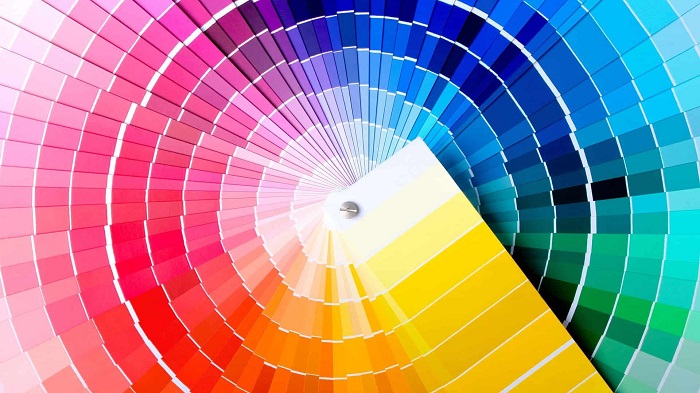
Color theory is the science of color. As you learn color theory, you’ll understand why we see a specific color and what emotions it evokes. Color can stimulate you to take action, it can cause anxiety or soothe you. It can help emphasize important information, or make minor details less noticeable.
Color has a powerful influence on human emotions. Thus, when you choose a particular color, you need to account for the special features of the psychology of its perception. Each person reacts to certain colors in their own way, but there are also generalized emotional responses that must be taken into account when designing websites, outdoor advertising, interiors, etc.
In addition to the choice of color, you also need to consider the issues of combining certain colors. Color combinations can be either complementary or contrasting. By properly choosing a color combination, you can immerse a person in a restful state, or vice versa, activate their attention.
Color theory. Color
Color is a sensation that occurs in the eye when it is exposed to light, or, in other words, light + vision = color.
Light is the motion of an electromagnetic wave. Visible color wavelengths range from 380 nm. to 760 nm

Ultraviolet light has wavelengths under 380 nm, and infrared light – over 760 nm.
Color depending on the wavelength:
- Red 760-620 nm
- Orange 620-585 nm
- Yellow 585-550 nm
- Yellow-Green 575-550 nm
- Blue 510-480 nm
- Blue 480-450 nm
- Violet 450-380 nm
The human eye distinguishes 120 colors in the visible spectrum. These colors are usually divided into three groups:
- Short-wave (380-500 nm), includes Violet, Blue-Violet, Blue, Cyan.
- Medium-wave (500-600 nm), includes Green-Blue, Green, Yellow-Green, Yellow, Yellow-Orange, Orange.
- Long-wave (700-760 nm), includes Orange, Red-Orange, Red.
All colors are divided into chromatic, achromatic and polychromatic.
Color theory. Achromatic colors
White, black, and all shades of grey. This spectrum includes rays of all wavelengths in equal proportion, and the energy of the individual rays that comprise this mixture is the same.

Color theory. Chromatic colors
Comprises all spectral colors and many natural colors. This spectrum includes all rays, but there is a predominance of a certain wave (maximum). For instance, red rays (760-620 nm) carry most of the energy in the red spectrum.

Color theory. Polychromatic colors
Earth colors, i.e. colors mixed with achromatic colors.

Color theory. Psychophysical color characteristics
Color theory. Color tone
This is the quality that allows to compare a color with one of the spectral or magenta colors (except chromatic) and give it a name.

Color theory. Lightness
This is the degree to which a given color differs from black. It’s measured by the number of difference thresholds from a given color to black. The lighter the color, the higher its lightness. In reality, this concept is usually replaced with the concept of "brightness".

Color theory. Saturation
This is the degree of difference between a given chromatic color and an achromatic light flux that is uniform in energy saturation. It is also measured by the number of difference thresholds from the given color to gray. (In other words, it’s the proportion of pigments in the original pure color). It may be replaced by the concept of purity. Purity is the proportion of a pure spectral color in the total mixture of a given color, or the proportion of a pure pigment in a paint mixture.
Hue + Saturation = Coloration
Achromatic colors have no hue or saturation.
Color theory. Color temperature
Color temperature is its relative warmth or coldness.
- Warm: Red, Red-Orange, Orange, Yellow-Orange, Yellow, Yellow-Green.
- Cold: Cyan (Blue-Green), Blue, Blue-Violet, Violet.
- Hottest: Red-Orange.
- Coldest: Cyan (Blue-Green).
- Neutrals (Green and Purple).
Color theory. Color perception
Isaac Newton (1642-1727) discovered that a ray of daylight can be separated into seven colors of the spectrum: red, orange, yellow, green, blue, indigo and violet.
Thomas Young (1773-1829) developed Newton’s color theory and proved that a light ray can be decomposed into only 3 spectral colors: red, green and blue.
Hermann Helmholtz (1821-1894). Based on Young's work, he showed that the human eye perceives color as a combination of red, green and blue light waves. Thus, our brain "breaks down" the color of each object into different proportions of red, green and blue in it.
The surface of an object absorbs and reflects light rays. The human eye can only see reflected colors.
If a surface reflects only red rays out of the entire spectrum, then we see it as red.
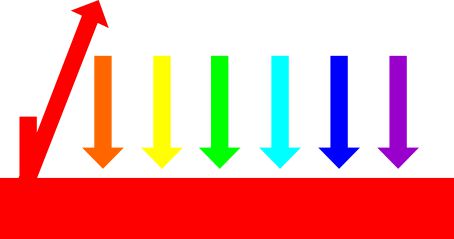
If a surface reflects only green rays out of the entire spectrum, then we see it as green.
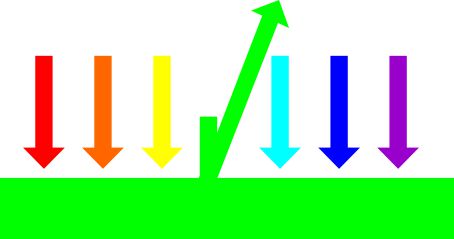
If a surface reflects all the rays, we see it as white.
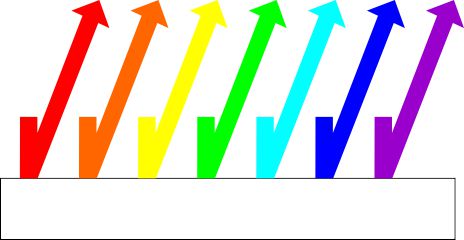
If a surface does not any rays, we see it as black.

Color theory. Color wheel
A color wheel is a way of representing continuous color transitions.
According to Johannes Itten, the color wheel comprises three elements:
1. an equilateral triangle in the center, inscribed in a circle
2. a hexagon added on to it
3. a second circle of a larger radius, which, combined with the first, forms an outer circle. It is divided into 12 equal sectors.
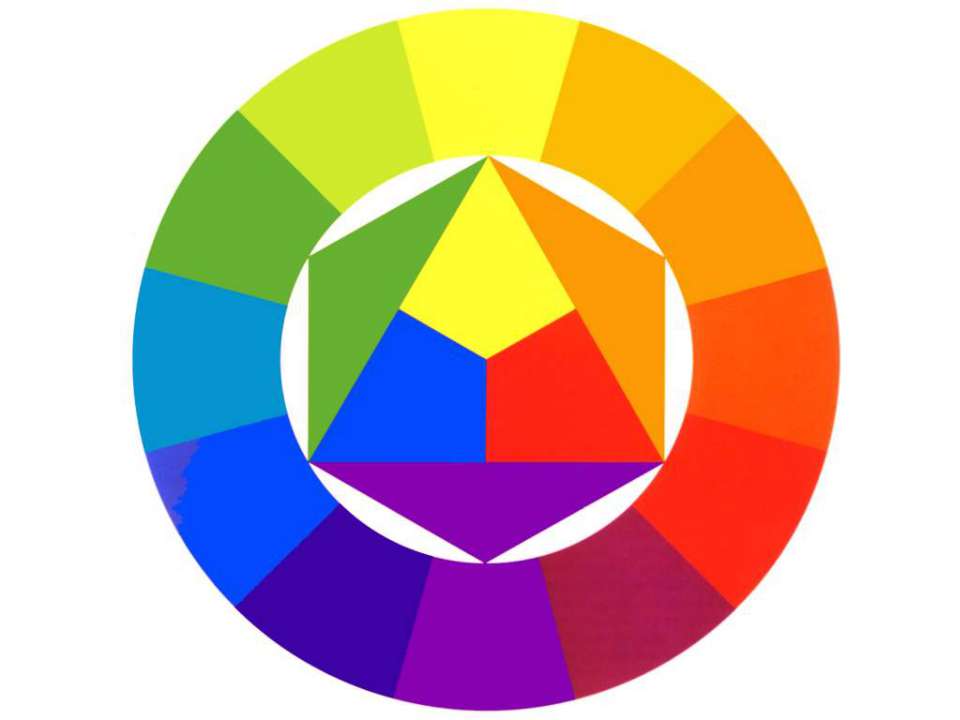
The best way to understand the color wheel is to make it yourself, or at least to understand how it’s made.
Red, blue, yellow are the primary colors.
These colors are arranged in a triangle in the center and the sectors in the outer circle opposite the corners of the triangle.
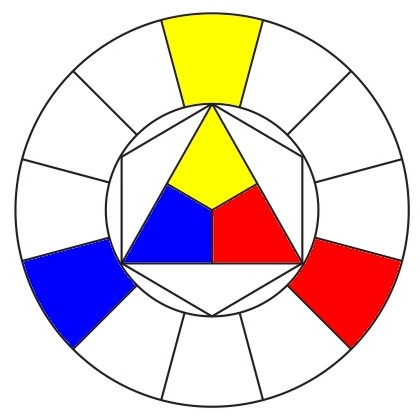
By mixing the primary colors in pairs in equal proportions, we obtain secondary colors - orange, green and purple. They are painted in a hexagon inside the outer circle and those sectors that its vertices point to.
yellow + red = orange,
yellow + blue = green,
red + blue = purple.
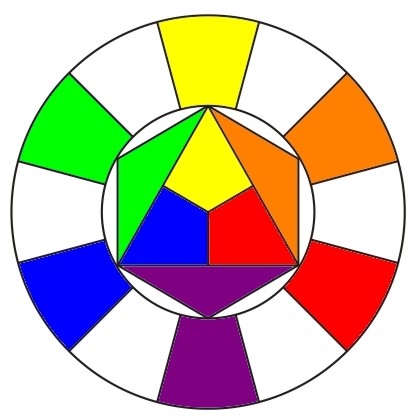
Then, every other sector of the outer circle is painted: yellow - empty - orange - empty - red - empty, etc. It is very important to mix the colors carefully, aiming for an equal amount of each pigment in the pair: 50% red + 50% yellow, 50% blue + 50% red. Otherwise, the resulting colors will have a color bias towards one of their ‘parents’. For example, instead of pure green, you can go too far with the blue pigment and get a green with a bluish tint, which is incorrect.
The third step is to obtain tertiary colors. These are the colors obtained by mixing the primary parent color with its neighboring secondary derivative.
yellow + orange = yellow-orange,
red = orange = red-orange,
red + purple = red-violet,
blue + purple = blue-violet,
blue + green = blue-green,
yellow + green = yellow-green.
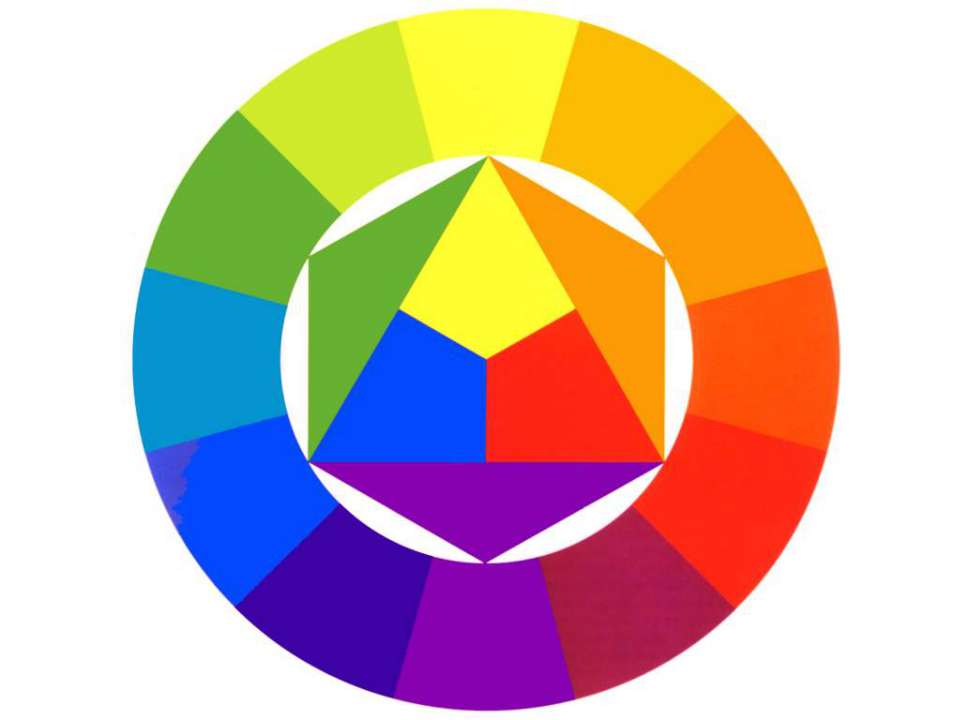
Then we paint over the empty sectors with the obtained colors and get the correct color wheel where each color has its place.
Color theory. Complementary colors (complementary combination)
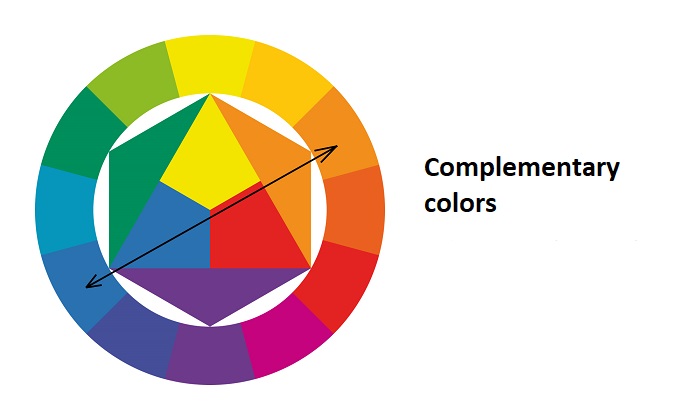
Colors located across from each other on the color wheel and combinations of such colors are called complementary.
- purple and yellow,
- blue and orange,
- red and green, etc.
Remarkably, when superimposed on each other (mixed), they absorb (eliminate) each other. Red + green = grey. This effect is used by cosmetologists in makeup correction. Blue circles under the eyes are removed with a salmon-colored corrector, and red spots - with a green corrector. When used side by side, two complementary colors emphasize each other, becoming brighter, which is why one color is used as the main one, and the other – as an additional shade, in a small dose.
Color theory. Classic triad
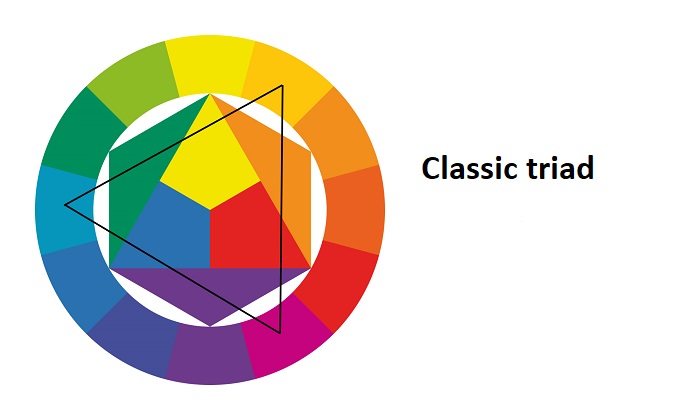
A combination of 3 colors that are at an equal distance from each other.
- red + yellow + blue;
- green + orange + violet, etc.
Color theory. Analogous triad
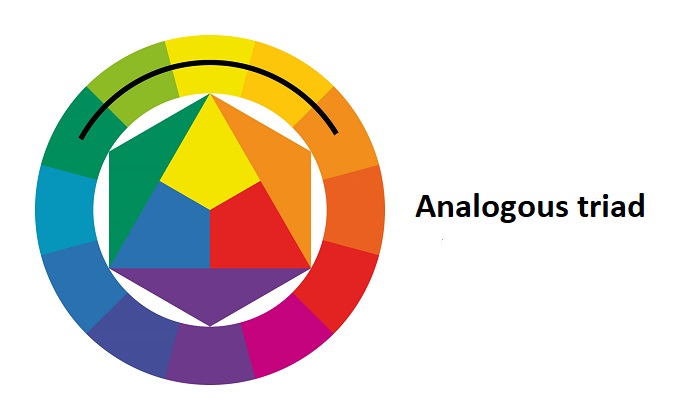
A combination of 3 colors that are in close proximity to each other.
- yellow-green + green + blue-green;
- red + red-violet + violet, etc.
This combination is used to create soft, harmonious compositions, with a smoothly flowing color. Just as in the classic triad, one color dominates, and the other 2 are used to support it.
Color theory. Contrasting triad
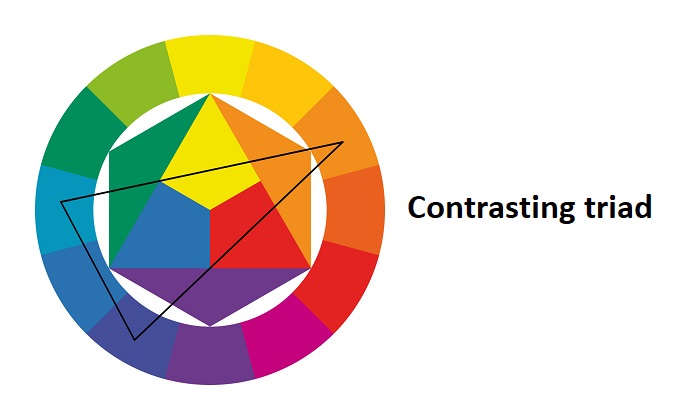
A combination of complementary colors that oppose each other in a circle. Unlike the first case, it doesn’t only use the opposite color, but also the two colors next to it. If we choose complementary colors, such as green and red, instead of green, there will be blue-green and yellow-green. This option is moderately contrasting, and more subdued than the first one.
The color wheel is usually divided into warm and cold halves.
Warm colors: red, orange, yellow and intermediate shades.
Cool colors: blue, cyan, green, and intermediate colors - blue-violet, blue-green.
Color theory is the science of color, which includes sections on color culture, color harmony, color preferences, and color language, in addition to the science of color per se. It relies on the physical foundations of color, the psychophysiological foundation of its perception, and at the same time accounts for the social perceptions of the color culture, therefore addressing almost all of its spheres.
The existence of stable color preferences symbolizes entire stages in cultural development. Colors groups and the ways of harmonizing them become a kind of signs within common cultural phenomena. The language of color is a part of two sign systems – artistic/aesthetic and functional/utilitarian. The first is mainly based on the symbolism of color and the color culture, the second - on the psychophysiological characteristics of perception and reaction to color.