“Raise my eyelids” or how a photographer can learn to see the light
Surprisingly, color prevents us from seeing the play of light and shadow clearly. The transitions from light to shadow are not as noticeable in color shots, and it takes practice to get better at seeing them.
For example, let’s look at the same photo in color and black and white.

The black and white photograph comprises nothing but light. Nothing distracts us from the very essence of photography – which is painting with light. In the above picture, you can clearly see that the photo is built upon color, and that the face barely has any volume – in fact, it looks pretty flat. It’s apparent in the black and white version, while the color version distracts us with the color. With the advent of color photography, on the one hand, we got pictures that are livelier and more realistic, but on the other hand, we have forgotten how to see the volume.
This is a skill that needs to be practiced. To begin with, I advise all beginners to examine and analyze more black and white photographs, because they are the best way to learn to see the play of light and shadow without being distracted by color.
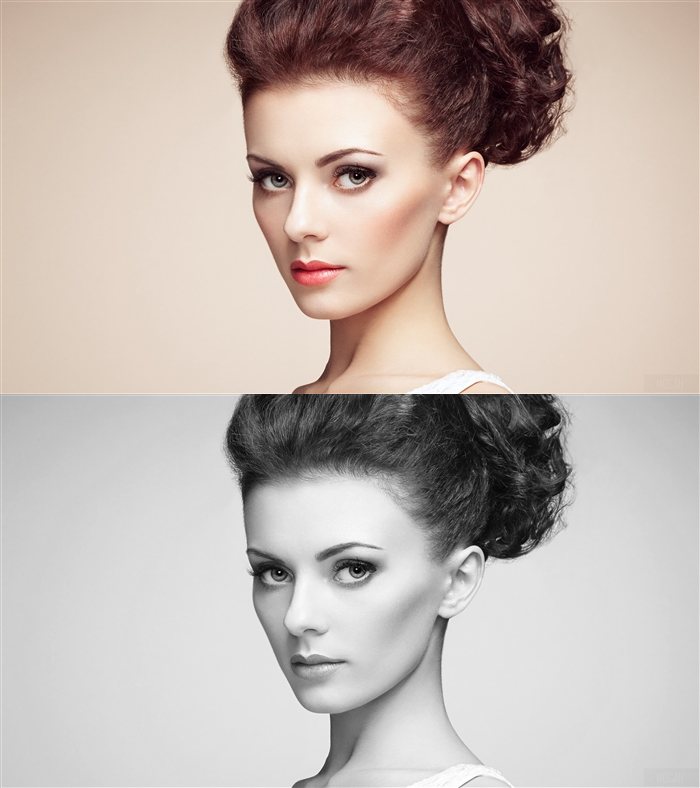
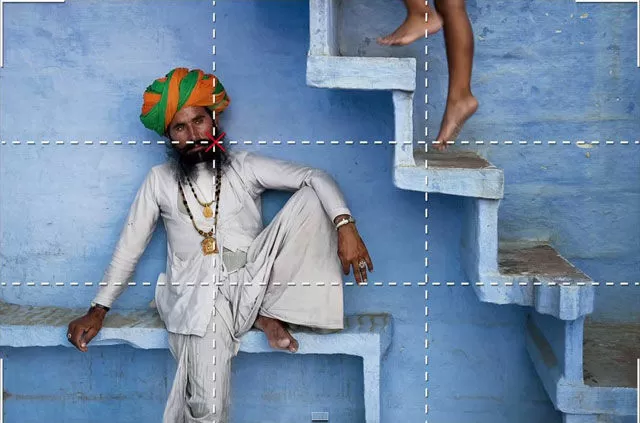
This is a very vivid example of working with volume. Even the color version of the picture has a lot of volume. If you compare the first and the second photo in this post, you’ll agree that the second one shows a lot more volume. I wouldn’t say that the first one is a bad photograph, it’s just structured differently. However, since we are discussing volume, it served as an excellent example.
This is not to say that all beginners don’t see the volume in a photo, but most are strongly distracted by color. As a result, color draws more attention in the shooting process.
In fact, if you wish, you can now become a very good photographer, because everyone can boost a very important skill known as "visual experience." It refers to an aspiring photographer’s observation and analysis of the work of other photographers. Familiarity with the works of recognized professionals who have achieved success in a particular niche of photography is crucial.
In addition to the above, a photographer needs independent practice. It should be thoughtful, and doesn’t only entail pressing a camera button. Aim to create a certain image, work out the details, prepare everything necessary, shoot, and analyze the result.
This method helps a photographer to grow professionally. Photography teachers often say: “Beginners need a lot of practice. Just shoot everything you see!”
I fundamentally disagree with this advice. Indeed, shooting everything you see will teach you something and boost your skills, but it’s an ineffective way to learn.
First, thoughtless shooting wastes your camera’s resource, which is not infinite. You can shoot several hundred, or even thousands of frames in a day. What will that lead to? To many hours of looking through the mostly useless material that can be deleted without regret.
Secondly, it wastes your time, which could be spent more efficiently and interestingly.
Thirdly, it teaches you to rely on luck, rather than to think your photograph through, which is damaging to a photographer!
In fact, this is all you need in order to learn how to see light and volume in the frame. Let’s summarize briefly. Here’s the list:
- Look at black and white photographs. Analyze them. Observe the transitions from light to shadow.
- Enhance your visual experience by looking at other photographers’ work.
- Practice effectively - set a goal, prepare everything you need, and shoot.
Thank you for reading through to the end!